 Bigtam
Content performance analytics for D2C
You are running 50 ads. How many are actually different?
Bigtam reads every ad frame by frame and names what is inside it. Build the next one with a structure instead of a hunch, and know it is not the tenth copy of the same idea.
Invite only, no card. Already have an account?
Read any ad frame by frame and name what is inside it.
Decode
0:23 · analysed frame by frame
Product first on screen at 0:10. 6 of 10 sampled frames, ±2.5s
- Belief stage
- mechanism
- Angle family
- convenience
- Proof vehicle
- demo
- Scene structure
- voiceover montage
- Opening frame
- problem visual
- Hook modality
- question
- Objection
- efficacy doubt
- Awareness
- solution aware
Structure
Every ad built with a named structure, and every ad you already run taken apart into the same vocabulary.
Measurement
Spend and revenue attached to those structures instead of to filenames. Waiting on Advanced Access from Meta.
What a decode returns
One ad, taken apart into fifteen named decisions.
Not a score. A vocabulary. The same words for your ad, your last winner and the competitor you keep seeing.
 HookProof vehicleOpening frameScene structureBeat, timestamped
The problem
The content is the ad structure now.
The levers that used to be an advertiser’s job have been automated away. Budgets, placements, audiences, bids. What is left to decide sits entirely inside the content, and almost nobody has a vocabulary for it.

01
So teams make more
Fifty ads a month, usually one idea repeated, with the budget spread thinner across it.
02
Nobody can say what changed
The account reports on filenames. A filename is not a fact about the content.
03
Every month starts from opinion
Without a shared vocabulary, last quarter teaches this quarter nothing.
How it works
Read, name, compare, rotate, measure.
Every ad read frame by frame. Every decision inside it named. Winners rotated into four builds that hold the argument and change the shape. And a funnel that rebuilds itself from what actually ran.
- Read
- Frames, transcript and timing. What the ad is built from.
- Name
- Fifteen dimensions plus the beat, in one shared vocabulary.
- Compare
- How much this looks like what you are already running.
- Rotate
- Four versions that hold the argument and change the shape.
- Measure
- Spend and revenue attached to structure, not to filenames.
The beat
0:23 · voiceover montage
Fifteen dimensions say what an ad is made of. None of them says what order it happens in, and order is most of what a creative team argues about.
- 0:00Problem
- 0:03Aggravation
- 0:10Mechanism
- 0:13Demonstration
- 0:19Proof
- 0:21CTA
Structural overlap with what you are running
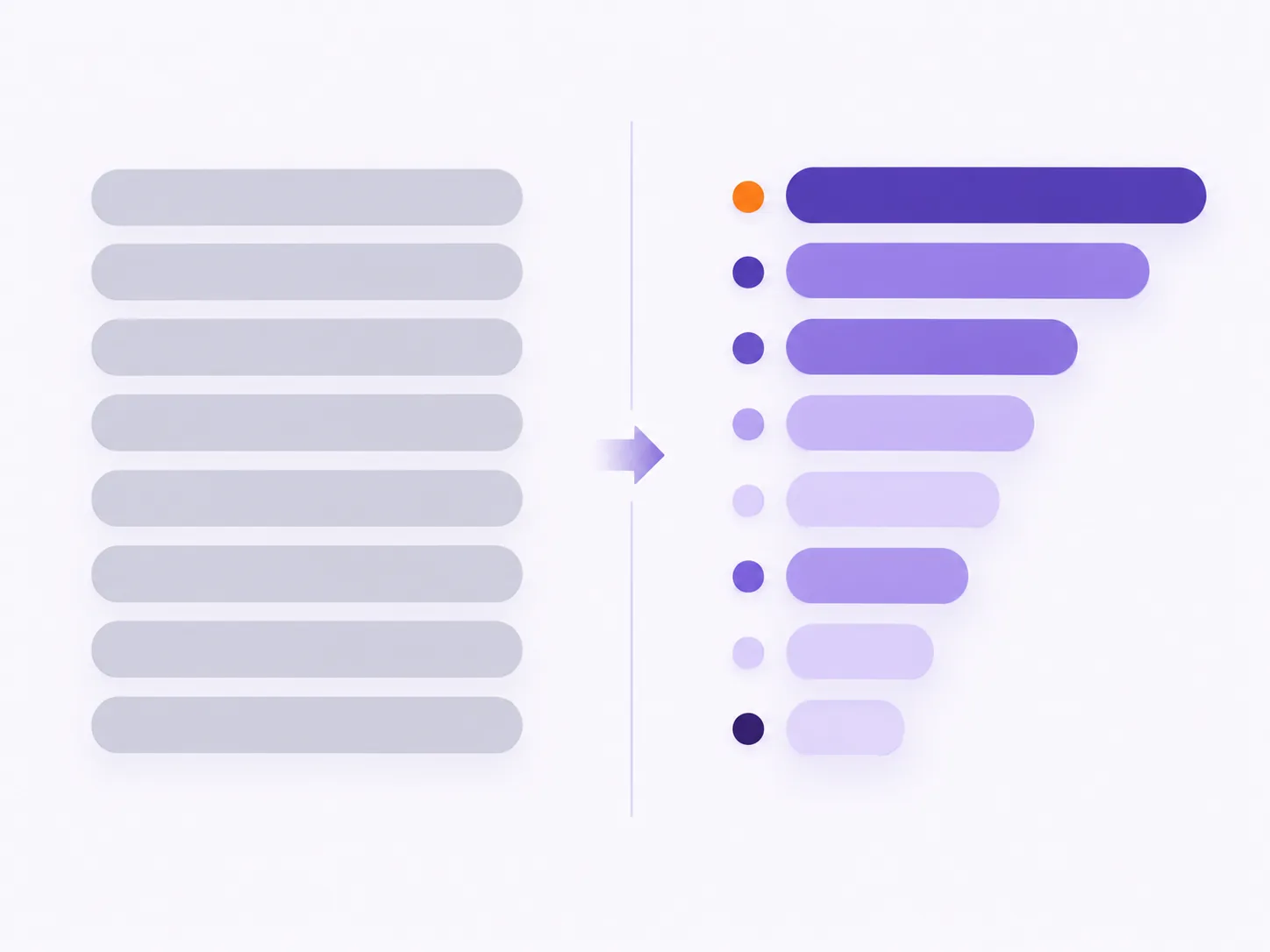
A weighted similarity over decoded tags: these two ads read alike structurally. It is not a claim about how any platform will treat them. Nobody outside Meta can see that, and a tool that pretends otherwise is guessing with a straight face.
Inside the console
Two tools. One vocabulary.

Piece to camera
Before and after
Unboxing
Product in hand
Demonstration
Lifestyle
Six ways to open. The console names which one an ad used, so the next brief can deliberately not use it again.
LadderPro
Your creativity needs structure.
LadderPro builds the belief ladder your product actually needs, what a buyer has to believe and the order they have to believe it in, then writes the briefs that fill it. Scripts, shot lists, and what not to do on set.
You say what you want in your own words and the engine writes it, then you tell it what to change. The same loop you already run in a chat window, with the structure kept underneath so the output is still comparable next month.
- A funnel built from your product page and an ad scan
- Briefs ready to shoot, free, because the analysis is the expensive part
- Every brief exports as a shoot document, AI video prompts or carousel prompts
- Every committed brief carries a minted name that encodes its structure
Aim it at someone who has never heard of us. Under 35 seconds.
That rung has two open slots and nothing written against this angle yet.
Hook
Nobody on the call noticed. That was the point.
Tell it what to change. Shorter, different hook, drop the voiceover

Andromate
Do not launch what you are already running.
Andromate tells you how much a new idea overlaps with everything already in your account, before it is shot, and turns one winner into four builds that hold the argument and change the shape.
Four ads built the same way are one ad with three spares. This is the tool that stops that happening by accident.
- Fifteen dimensions, plus a timestamped beat
- Structural overlap against what you are running today
- Four distinct variations, each downloadable as a brief
- Works on a competitor ad exactly as well as on your own
Decode
0:23 · analysed frame by frame
Product first on screen at 0:10. 6 of 10 sampled frames, ±2.5s
- Belief stage
- mechanism
- Angle family
- convenience
- Proof vehicle
- demo
- Scene structure
- voiceover montage
- Opening frame
- problem visual
- Hook modality
- question
- Objection
- efficacy doubt
- Awareness
- solution aware
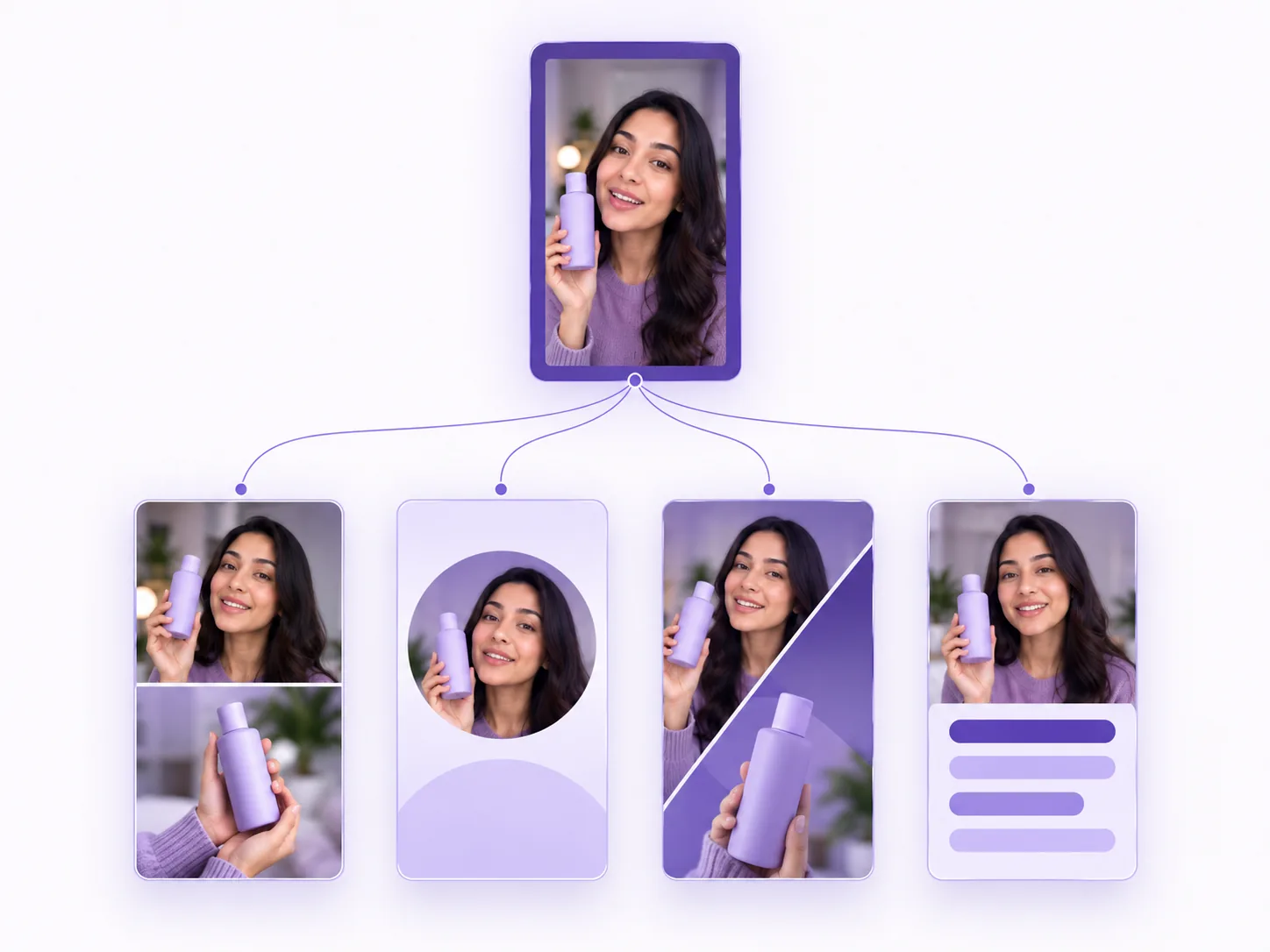
Solo piece to cam
same angle · same proof
Two person dialogue
same angle · same proof
Product demo first
same angle · same proof
Text driven
same angle · same proof
Then attach the money to the structures.
An ad account reports on filenames. It can tell you that final_v3_reedit returned better than hook_b and it cannot tell you why, because a filename is not a fact about the content.
Once every ad carries a named structure, the same spend reads differently. Which proof vehicle returns. Which opening frame holds. Which belief rung is worth another four ads. That is the whole point of naming things.
This half is not live yet, and the connect screen says so rather than pretending to work.
Meta ad account
Read spend and results for the ads you are already running, matched to the structures the console named.
Reading another business’s ad account needs Advanced Access, which Meta grants after review. Until it is granted this button does nothing, and saying so is better than a screen that looks broken.
Use cases
Six reasons a team signs in on a Tuesday.
- 01
Stop adjusting adsets.
The campaign levers that used to be yours are automated. What is left to decide is the argument, the proof and the shape of the ad itself.
- 02
Creating your next ad blindly?
Build it against a belief your funnel has not covered yet, with a structure you are not already running four of.
- 03
Running your competitors’ angles?
Read their live ads in the same vocabulary as your own, and find the rungs nobody in the category has argued.
- 04
Is the next one actually different?
Check before it is shot. Not different in the thumbnail. Different in the argument, the proof and the shape.
- 05
Turn one winner into four.
The argument and the proof held constant, the structure rotated. Same case, four ways of making it.
- 06
Liked a competitor ad?
Take it apart into fifteen named dimensions, then rebuild the shape around your own mechanism.
The claims we refuse to make.
Creative analytics is full of products that will tell you why an ad won. It is an inference from a sample of one with no control, and it is the reason nobody trusts the category.
We say
- “This ad is built like this, and here is the order it happens in.”
- “These two ads read alike structurally.”
- “This ran, this spent, this returned, across 40 of your 300 ads.”
We never say
- “This is why it won.”
- “This formula converts.”
- “This is what the algorithm is doing.”
- Any number we cannot show you the source of.
Coverage is printed on the face of every result, because a finding built on part of an account and presented as the whole is the most common lie in this category.
Start with one ad you are already running.
Decode it, and see whether what comes back matches what your team believed was in it. Then decide what to make next with the answer in front of you.

Built in India, for D2C brands in the UAE, Singapore and beyond. Onboarding growth stage brands in small batches.